PCDA Articles
PCDA Insights
Thought leadership, career trends, and community stories.
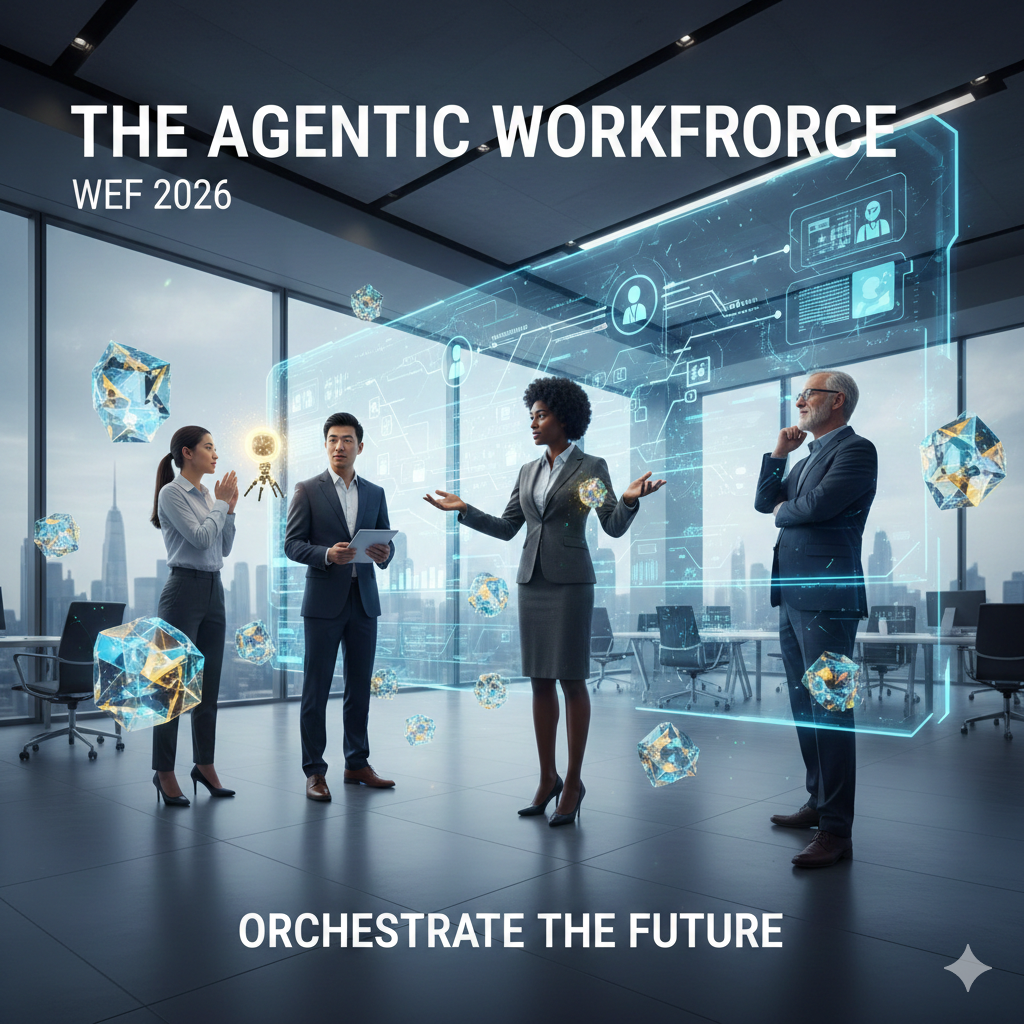
From Task-Doer to Agent Orchestrator: Decoding WEF 2026
The 2026 World Economic Forum (WEF) annual meeting in Davos has just concluded, and the Future of Jobs Report 2025/2026 confirms a massive paradigm shift: we are no longer just in a "digital transition". We are in an era of Supercharged Progress.
The data is clear: AI isn't just a tool; it's becoming an Agentic Partner.
Here is what you need to know to stay ahead in this evolving landscape:
The Macro Shift (2025-2030)
- Job Churn: 22% of current job roles will undergo structural change by 2030.
- The Net Positive: While 92 million roles may be displaced, 170 million new roles are being created—a net gain of 78 million jobs globally.
- The Skills Paradox: 39% of our core skills today will be outdated by 2030. Learning is no longer a one-time event; it is a permanent state of work.
The 3 Pillars for your 2026 Career Strategy
- Transition from "Doer" to "Agent Orchestrator". With 82% of executives planning to adopt AI Agents within the next three years, the most valuable professionals won't be those who perform routine tasks, but those who can direct, validate, and manage portfolios of AI agents. Your new job description? Orchestration.
- Lean into the "Human-Centric" Edge. As technical skills have a shorter shelf-life,
durable human skills are seeing a massive "wage premium". According to the WEF, the top skills for 2026 are:
- Analytical & Creative Thinking: Still the number one most sought-after capability.
- Resilience, Flexibility & Agility: The ability to pivot as fast as the tech does.
- Leadership & Social Influence: AI can calculate, but it cannot lead with empathy or inspire a movement.
- Embrace "Vocational Agility" early.The report warns of a "learning cliff" for entry-level roles. Young professionals must move past basic execution and toward high-level judgement and Digital Literacy (AI and Big Data) much sooner than previous generations.
The Bottom Line:
The "Co-pilot" economy is maturing into an "Agentic" one. Success in 2026 isn't about competing with machines, it's about the Human-AI Collaboration that removes low-value work to make room for high-impact innovation.
PCDA 2.0: Introducing Your New Office Bearer
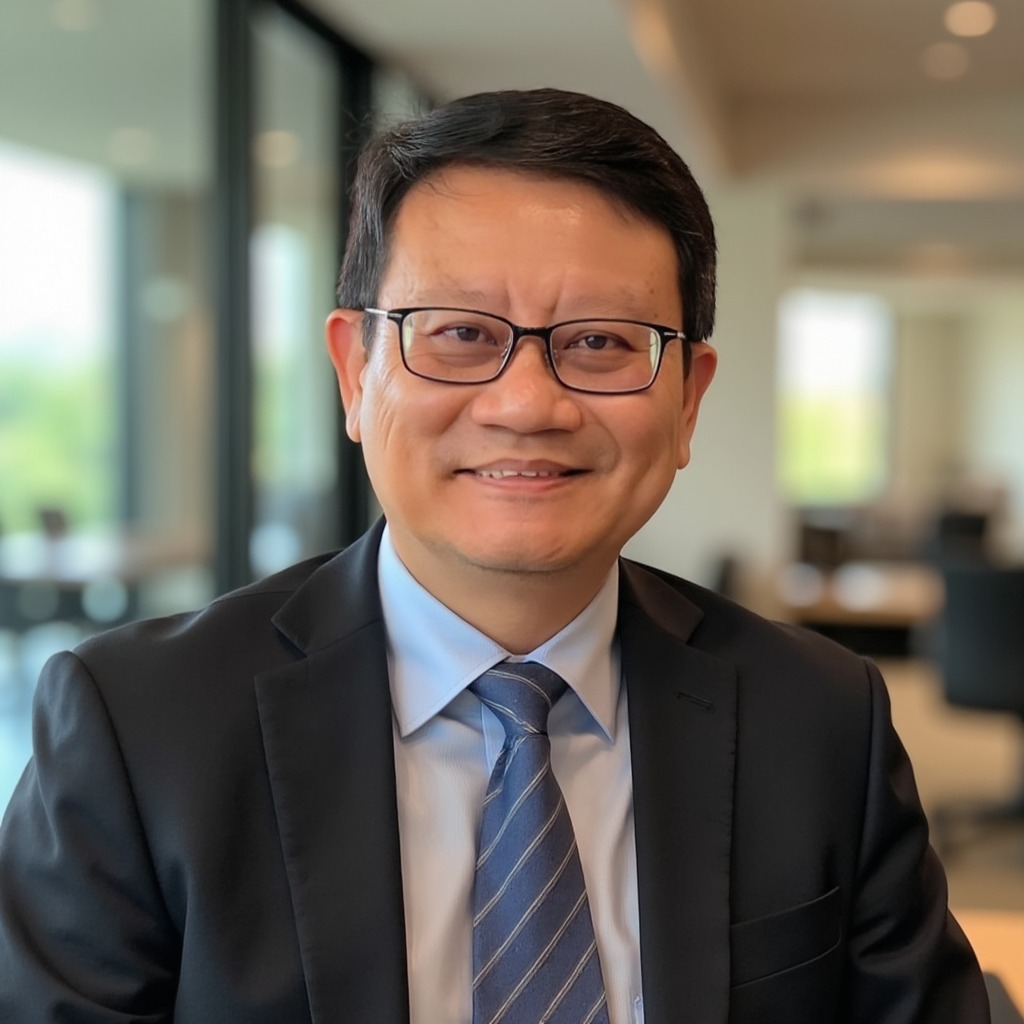
We are thrilled to announce the newly appointed Office Bearers for the People and Career Development Association (PCDA), Singapore!
As we look toward the future of career advocacy in Singapore and beyond, these leaders bring a wealth of experience, fresh perspectives, and a shared passion for empowering every individual to become the best version of themselves.
Introducing the Visionaries Leading the Way:



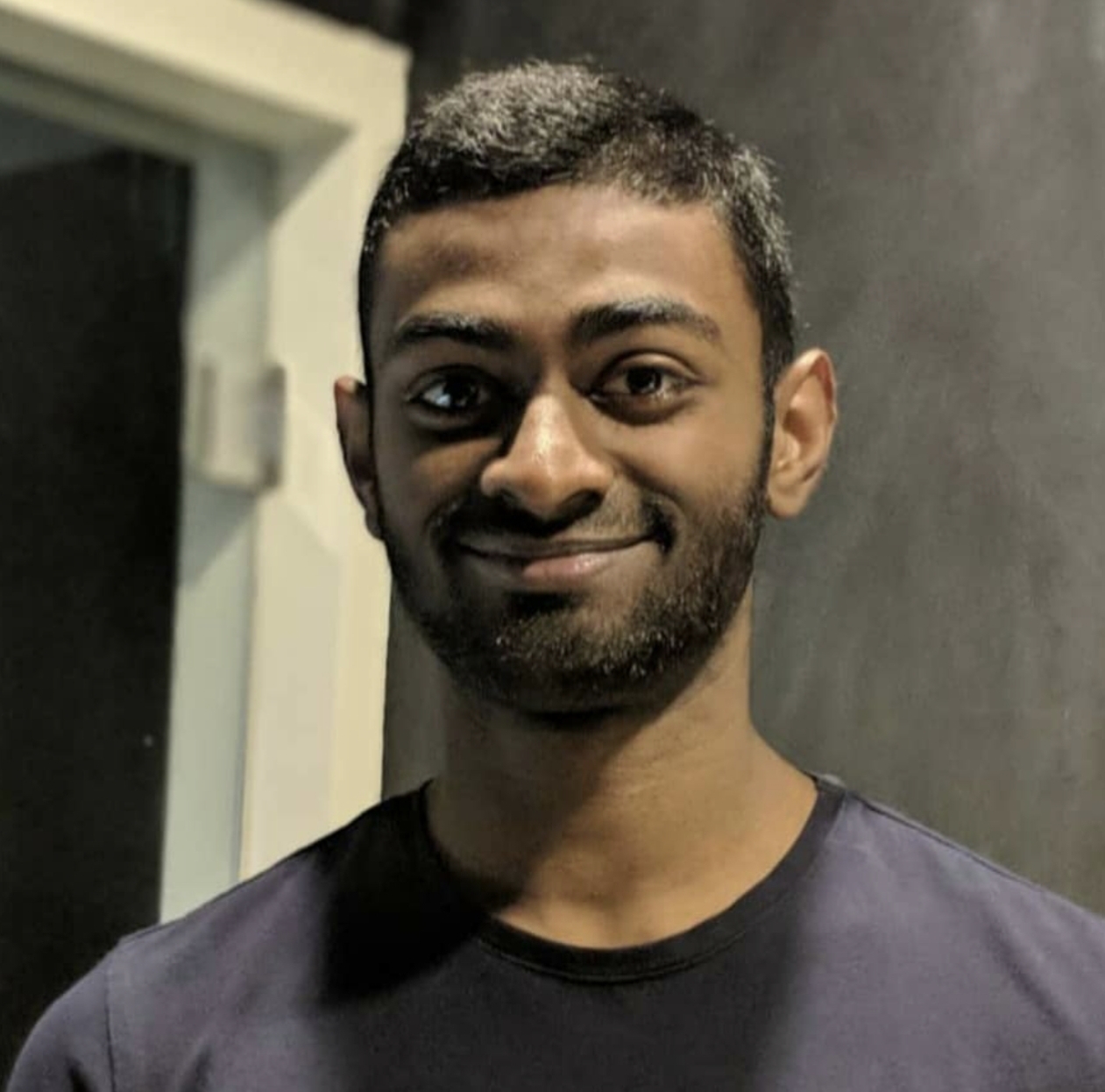

At PCDA, our mission has always been to impact lives through career development advocacy and professional growth.
- Elevating career practices through our Transformational Skills Framework.
- Strengthening our community of practitioners and professionals.
As a PCDA team, let's continue to champion the future of work, together!

The Mid-Career "Maintenance" Trap: Are you Coasting or Cultivating?
We continue from where our last article left off on 9 Feb 2026.
For many mid-career professionals in Singapore, the word "Maintenance" sounds a bit… uninspiring. It suggests standing still, keeping the lights on, or—dare we say—waiting for retirement.
But according to Donald Super’s Life-Span Theory, the Maintenance stage, typically ages 45–64 though shifting earlier in our fast-paced economy, is the most critical phase for long-term career satisfaction.
In 2026, Maintenance isn't about "holding on" to your job. It’s about sustaining your relevance.
The Maintenance Reality Check
Super identifies three key behaviors in this stage:
- Holding: Maintaining your performance level.
- Updating: Keeping up with new developments (Hello, AI integration!).
- Innovating: Finding new ways to do your job better.
In the context of Singapore, where the "sandwich generation" is balancing aging parents and rising costs, the Maintenance stage often feels like a heavy lift. If you feel like you’re just going through the motions, you might be experiencing stagnation rather than maintenance.
How to Master Maintenance in 2026:
- Shift from "Worker" to "Mentor": Super’s theory emphasises shifting roles. If your "Worker" role feels stale, lean into the "Mentor" or "Guide" role. Sharing your institutional wisdom with younger colleagues provides a fresh sense of purpose.
- The "Recycling" Pivot: Bouncing between two extremes. "Should I quit or stay?" (Creates "analysis paralysis").
- Update Your Self-Concept: Who are you now, compared to the person who started this career 20 years ago? If your self-concept has changed, your work approach must follow suit.
The PCDA Perspective: At PCDA Singapore, we see the Maintenance stage not as a plateau, but as a Powerhouse. This is the phase where your experience meets your influence. The goal isn't just to keep your job; it’s to evolve so that your job continues to deserve you.
We invite you to join us for more conversations like this Join us today
.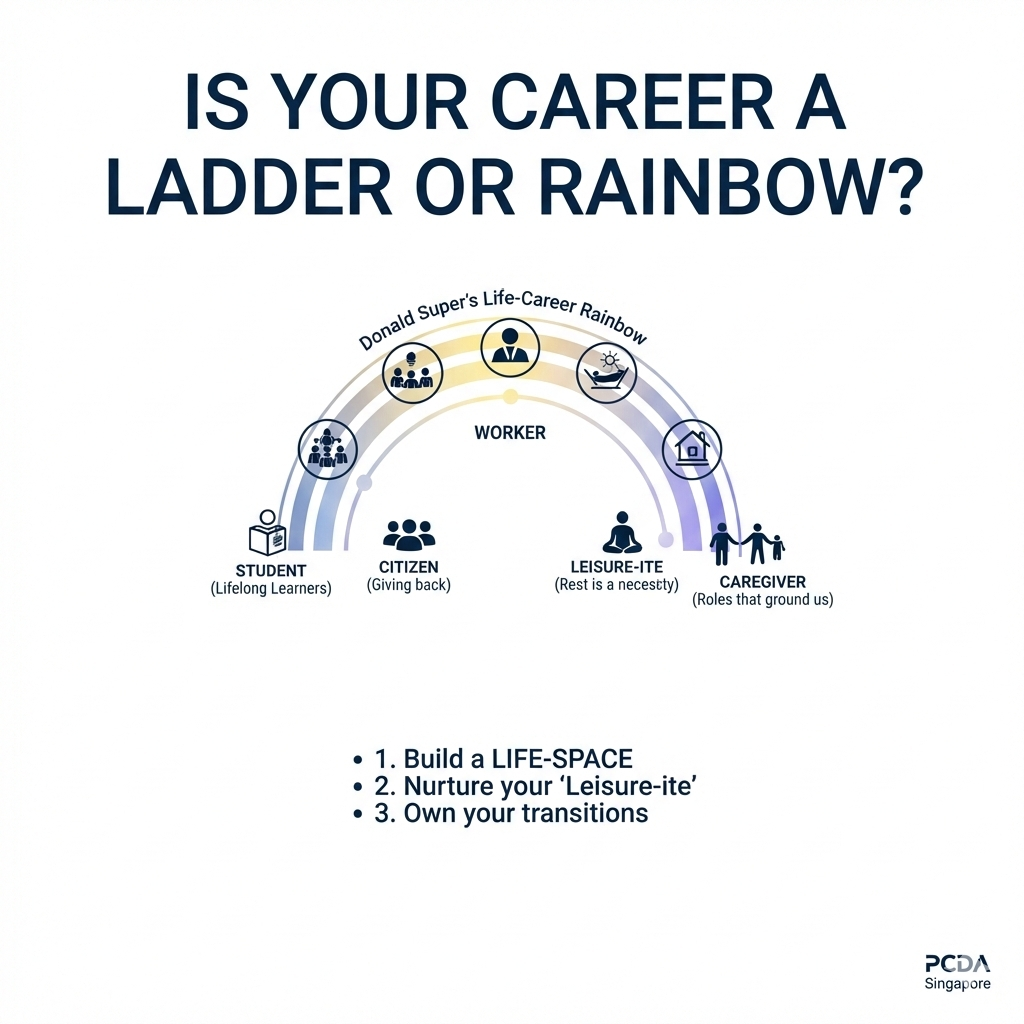
Is Your Career a Ladder or a Rainbow?
In the fast-paced rhythm of Singapore’s "SkillsFuture" era, we often obsess over the next rung on the corporate ladder. But at PCDA Singapore, we believe career development isn't just a vertical climb, it's about the full spectrum of your life.
This brings us to Donald Super’s Life-Span, Life-Space Theory.
While many career theories focus on what you do, Super focuses on who you are across your entire life. His "Life-Career Rainbow" reminds us that we aren't just 'Workers.' We are simultaneously:
- Students (Lifelong learners)
- Citizens (Giving back to our community)
- Leisure-ites (Yes, rest is a professional necessity!)
- Caregivers/Parents (The roles that ground us)
Why this matters in 2026:
In an age of AI-driven shifts and portfolio careers, your "Worker" role will inevitably change. If your entire identity is tied to a job title, a transition feels like a crisis. But if you view your career through Super's lens, a job change is simply a reallocation of space in your rainbow.
The PCDA Insight: True career resilience comes from Self-Concept. Super argues that we choose careers to enact our view of ourselves. As we grow, our self-concept evolves with us. In this way, it is okay, and even healthy, to "recycle" through stages of exploration and establishment, even in mid-career.
Our Takeaway for You Today:
Don't just build a resume; build a Life-Space.
- Identify your current roles: Which one is taking up too much "space"?
- Nurture your "Leisure-ite": In a high-performance culture, intentional rest is a transformational skill.
- Own your transitions: Moving from 'Establishment' back to 'Exploration' isn't a setback, it's a pivot toward a more aligned self-concept.
At PCDA, we empower career practitioners to look beyond the CV and see the human. Let’s stop asking "What do you do?" and start asking "How does your work fit into the life you are building?" Join us today
Why your “5-Year Plan” is probably failing
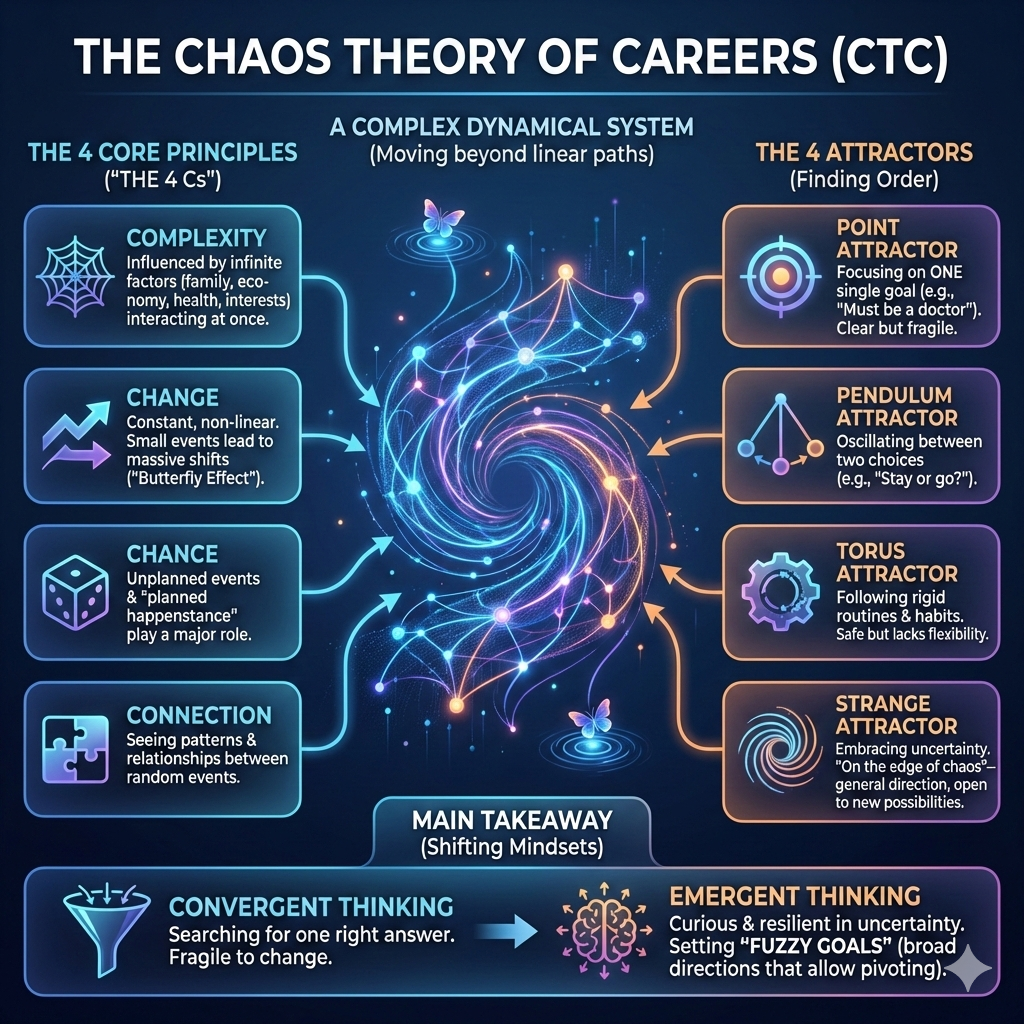
Most of us were taught that a career is a ladder. If you just work hard and follow the steps, you’ll reach the top. But in 2026, this ladder feels more like a complex, swirling weather system. If you feel like your career path has been messy or unpredictable, you’re not "off track", you might just be experiencing The Chaos Theory of Careers (CTC).
Developed by Robert Pryor and Jim Bright, CTC argues that because the world is interconnected and volatile, small unplanned events often have more impact on our success than our rigid plans.
Which "Attractor" are you currently stuck in?
The theory identifies four ways we try
to create order. Most people get stuck in the first three:
- The Point Attractor: Obsessing over one single, rigid goal. (High focus, but very fragile if things change).
- The Pendulum Attractor: Bouncing between two extremes. "Should I quit or stay?" (Creates "analysis paralysis").
- The Torus Attractor: Sticking to safe routines and "the way we’ve always done it." (Safe but kills growth).
The goal? 4) The Strange Attractor. This is the "Edge of Chaos”: a mindset where you have a general direction while remaining open to new, unpredictable possibilities. Rather than following a rigid map; you have a compass.
The shift to achieve this? From "Convergent" to "Emergent" Thinking: stop looking for the one right answer. Instead, set “Fuzzy Goals.” A fuzzy goal is a broad direction (e.g., "I want to solve climate issues through data") rather than a narrow title (e.g., "I have to be a Senior Analyst at X Company"). This allows you to pivot when the "chaos" of life inevitably happens.
The takeaway? Don't fight the chaos. Use it.
Join PCDA to discuss these concepts and applications with like-minded individuals.
Is Indecision Actually a Career Superpower?
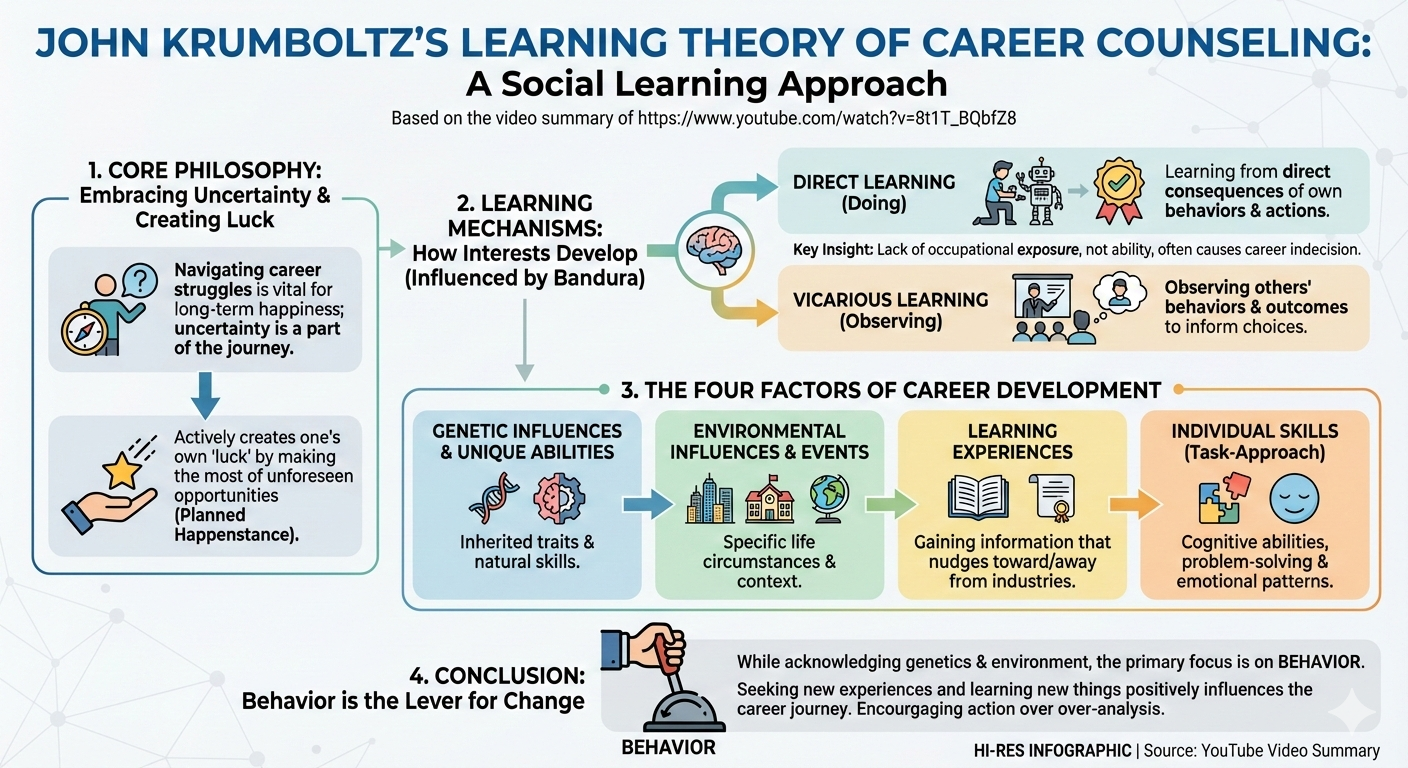
As career practitioners, we often meet clients who feel "stuck" or "lost" because they haven't found their one true calling. But, according to John Krumboltz’s Learning Theory of Career Counseling, that uncertainty is actually a vital part of the journey. Krumboltz’s work reminds us that career development isn't just about matching person to a job; it’s an ongoing process of social learning.
Key Takeaways for our Practice:
- Action over Analysis: Satisfying careers are built by actively creating "luck" and seizing unforeseen opportunities, a concept often known as Planned Happenstance.
- The Power of Exposure: Clients often struggle not because they lack ability, but because they haven't been exposed to enough environments to learn what fits.
- Learning Mechanisms: We develop interests through Direct Learning (doing the work) and Vicarious Learning (observing others).
- The 4 Influencers: Our clients are shaped by their genetics, their unique environments, their past learning experiences, and their specific task-approaching skills (like problem-solving and emotional patterns).
While genetics and environment play a role, Krumboltz emphasises that behaviour is the lever we can pull. By encouraging our clients to seek out new experiences and view "luck" as a skill to be developed, we empower them to navigate an unpredictable world.
Practitioner question: How do you help your clients move from "I don't know what to do" to "I'm going to try this and see what happens"?
To learn more, watch this youtube video about the Learning Theory of Career Counseling, and view the infographic below.
Ever Feel Like Your Career Is a Puzzle?
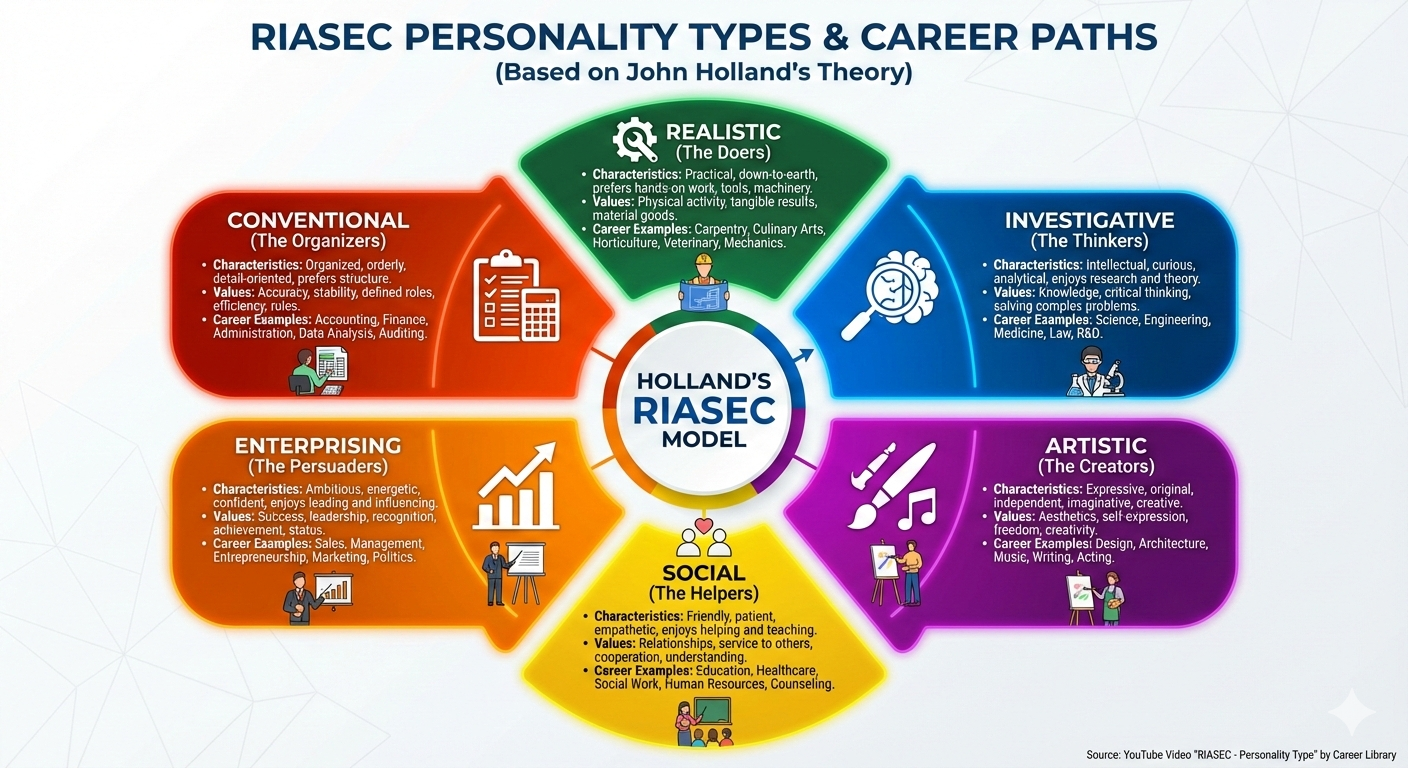
As we navigate the 2026 workplace, defined by rapid AI integration and a shift toward skills-based hiring, one thing remains constant: personal alignment is the key to long-term fulfillment. John Holland’s RIASEC model is a powerful compass for finding your "professional flow." It categorises our interests into six distinct personality types:
1. Realistic (The Doers)
Characteristics: These individuals are practical,
down-to-earth, and comfortable working with their hands, tools, machinery, plants, or
animals.
Values: They prioritise physical activities and material goods.
Career Examples:
Carpentry, culinary arts, horticulture, machinery, and veterinary services.
2. Investigative (The Thinkers)
Characteristics: Driven by an "unquenchable thirst
for knowledge," they enjoy theory, research, and understanding the "why" and "how" behind
things.
Values: They value critical assessment, intellectual pursuits, and solving scholarly
problems.
Career Examples: Medicine, law, engineering, R&D, and natural or social sciences.
3. Artistic (The Creators)
Characteristics: These individuals are expressive,
original, and independent, often needing to channel their creativity through shapes, colours, words, or
music.
Values: They highly value imagination, freedom, and aesthetics.
Career Examples: Acting,
architecture, authoring, design, and music.
4. Social (The Helpers)
Characteristics: They are friendly, patient, and loyal
people, who find fulfillment in caring for, advising, and supporting others.
Values: They prioritise
feelings, respectful interactions, and providing service.
Career Examples: Education, social
services, healthcare, human resources, and training.
5. Enterprising (The Persuaders)
Characteristics: Visionaries who are energetic and
ambitious, they excel at directing, motivating, and leading others.
Values: They value
responsibility, recognition, and success in sales or management.
Career Examples: Entrepreneurship,
management, marketing, consultancy, and sales.
6. Conventional (The Organisers)
Characteristics: These individuals bring order to
the world by working with numbers, data, and facts in structured environments.
Values: They are tidy
and reliable, valuing accuracy, defined goals, and frameworks.
Career Examples: Accounting, auditing,
finance, administration, and procurement.
In today’s human-centric economy, knowing your Holland Code (your top three dominant types) doesn't just help you find a job, it helps you find a work environment where you can truly thrive.
Which personality type resonates most with you?
Reflecting On My 2025 Career Journey
As we approach the end of 2025, it’s time to look back before moving forward. The workplace has evolved rapidly this year, from the normalisation of hybrid rituals to the deep integration of AI in our daily workflows.
How has your professional landscape changed?
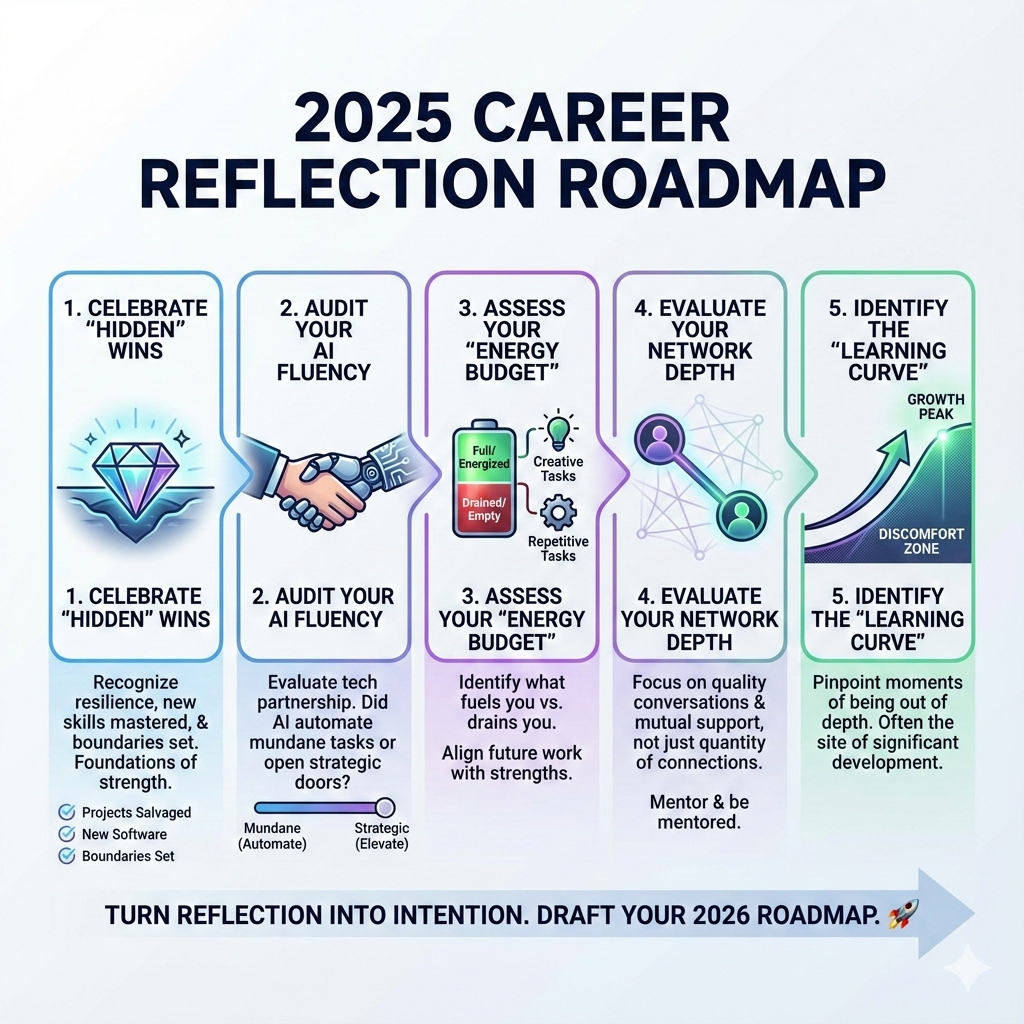
Here are 5 key points to help you reflect on your 2025 Career Journey:
- Celebrate the "Hidden" Wins: Beyond promotions, look at the projects you salvaged, the new software you mastered, or the boundaries you finally set. These are the foundations of your resilience.
- Audit Your AI Fluency: Reflect on how you’ve partnered with technology this year. Did you use it to automate the mundane, or did it open doors to higher-level strategic work?
- Assess Your "Energy Budget": Which tasks left you feeling energised, and which left you drained? Use this data to steer your 2026 goals toward work that aligns with your natural strengths.
- Evaluate Your Network Depth: It’s not about how many connections you made, but how many conversations you had. Who supported your growth this year, and who did you mentor in return?
- Identify the "Learning Curve": Growth often feels like discomfort. Pinpoint the moment you felt most out of your depth this year. This is likely where your most significant development happened.
Reflection is the first step toward intention. Don't let your 2025 lessons go to waste as you draft your 2026 roadmap.
What was your biggest professional "aha!" moment of 2025? Share it with us in the comments!
What Colour is Your Parachute?
Calling all Career Practitioners!
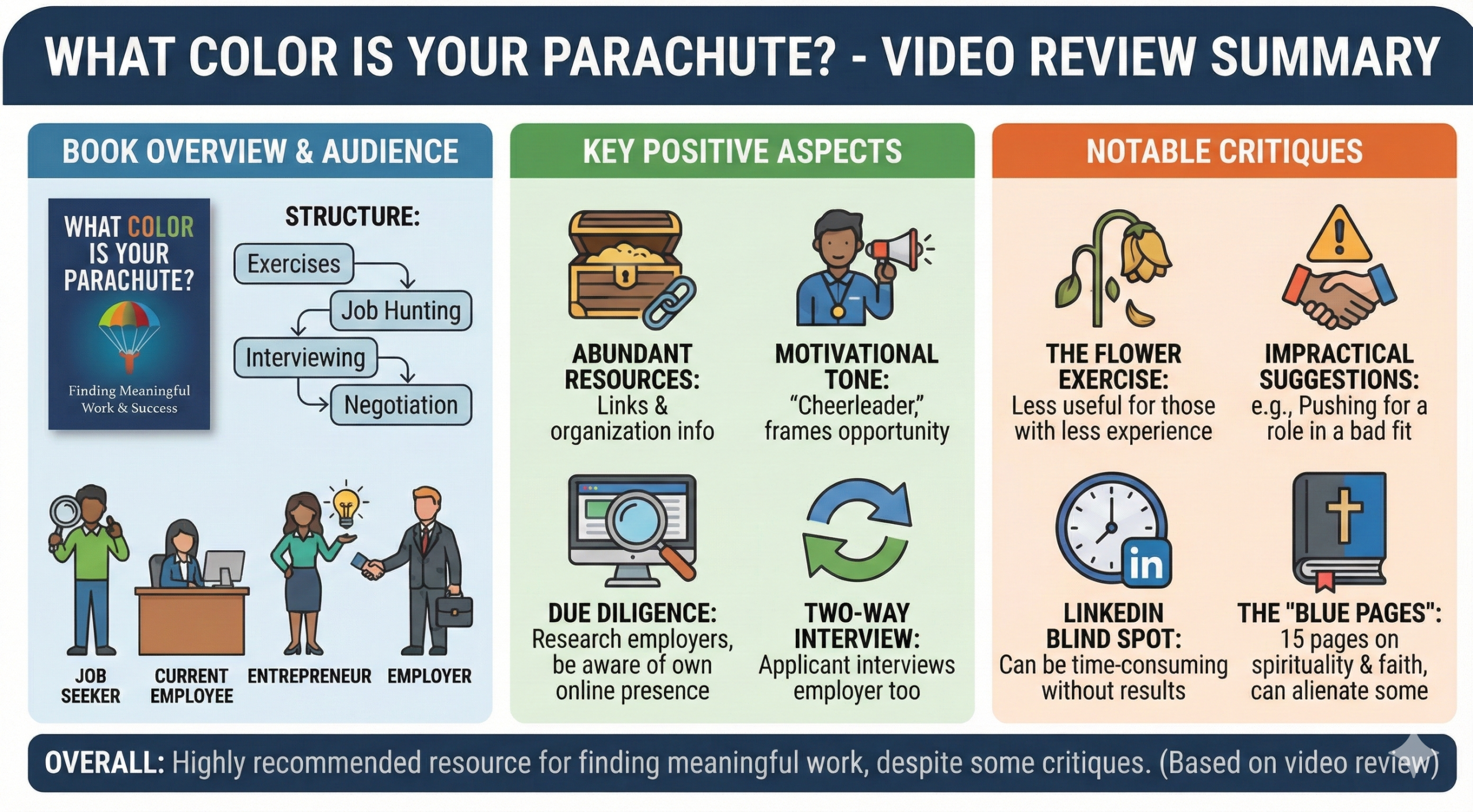
Just dropped a quick visual summary of the key takeaways from the classic career guide, "What Color Is Your Parachute?".
This infographic highlights the core strengths, structure, and a few notable critiques of the book, helping you quickly assess its relevance for your clients. It also highlights areas to consider when integrating the advice from the book.
Meet Kaylene Wong (Vice President, PCDA)
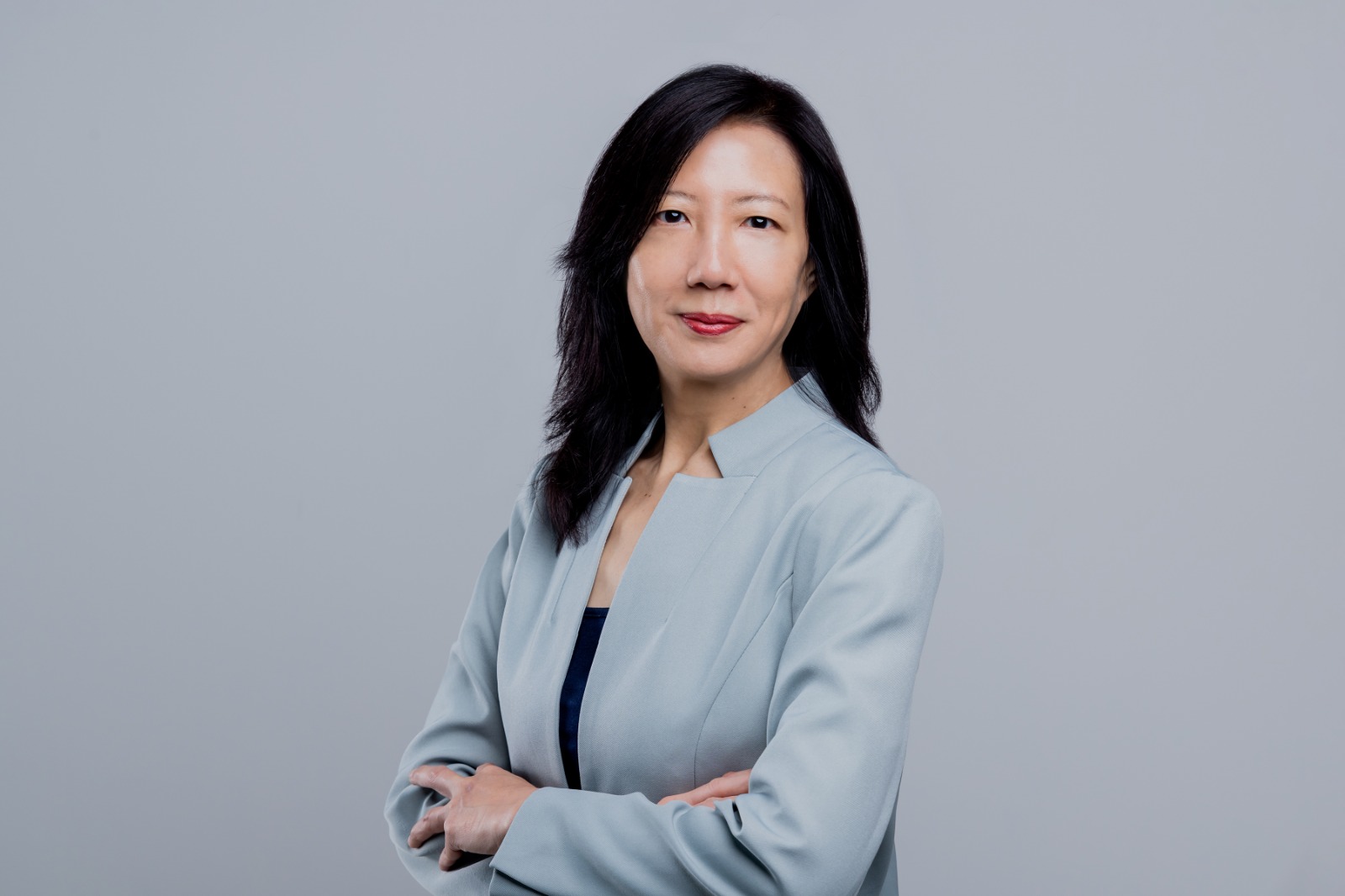
Kaylene Wong, the Vice President of PCDA, is a seasoned consultant and trainer. She specialises in integrating workforce capability development, digital transformation, and sustainability into practical, measurable business outcomes. As the Managing Director of John Ethans International, she partners with organisations to align human capital development with technology adoption and sustainable practices — building long-term business resilience in an evolving economic landscape.
With a strong foundation in human capital strategy, talent acquisition, and organisational development, Kaylene has guided numerous organisations through end-to-end digital and workforce transformation journeys. Her expertise spans practical digital roadmaps, leadership alignment, workforce upskilling, talent optimisation, and employee engagement—always with sustainability embedded at the core. She delivers ESG capacity-building programmes anchored in global standards, including ISO 26000 Social Responsibility, ISO 30406 Sustainable Employability, and ISO 30408 Human Governance. These initiatives help organisations strengthen their Social and Governance dimensions, improve sustainability reporting disclosures, and adopt responsible business practices.
Within PCDA, Kaylene played a pivotal role in contributing to the Career Development Framework – Six Transformational Skills Framework for Career Development. This framework serves as a strategic guide for career pathways, competency models, and progression strategies across industries, benefiting individuals, companies, and career professionals. Her work reflects PCDA’s mission to future-proof careers, foster inclusive growth, and empower people to thrive in a rapidly changing work environment.
Beyond her leadership at PCDA, Kaylene is a Partner Consultant for SGTech’s Digital Transformation for SMEs (DT-SME) programme, where she supports companies in identifying digital priorities, mapping transformation plans, and building internal capabilities. She is also a much sought-after industry speaker, sharing insights on the intersection of people, technology, and sustainability. Her professional credentials include Green Compass Certified Consultant (A*STAR), Advanced Certificate in Learning and Performance (IAL), Certified Performance Leadership Coach (ICF), Career Advisory Programme (WSG), and Certified Career Services Provider (NCDA). She holds a Bachelor’s degree in Philosophy and Sociology from the National University of Singapore and a Specialist Diploma in Career Counselling from Republic Polytechnic.

The Future of Work: Top 5 Skills Employers Will Demand in 2025
The workplace is evolving faster than ever—are you ready?
In 2025, employers will prioritize:
- adaptability
- AI literacy
- emotional intelligence
- data fluency
- creative problem-solving
The question is: Which of these skills do you need to develop next?
Gone are the days when technical skills alone guaranteed success. Now, soft skills like resilience and collaboration are just as critical. The rise of remote work and AI means professionals must balance human and digital strengths.
So, how can you future-proof your career? Start by auditing your skill gaps. Take an online course, seek mentorship, or volunteer for stretch projects. Small steps today can lead to big opportunities tomorrow.
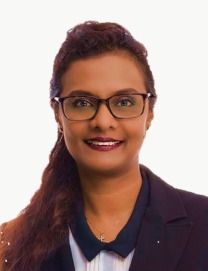
Meet Charlotte George (President, PCDA)
Charlotte George is a certified career coach, mentor, and thought leader in employability and lifelong learning, with over 20 years of experience supporting individuals from diverse backgrounds, including youths, mid-career switchers, and senior professionals. Trained by Workforce Singapore (WSG) and the National Career Development Association (NCDA) (USA), she brings deep expertise in designing and delivering outcome-driven, competency-based training and development programmes.
Charlotte played a pivotal role in shaping the early foundation of Singapore’s national career development infrastructure. As one of the pioneer practitioners during the Workforce Development Agency (WDA) era, she contributed to the establishment of career centres, the professionalisation of career services, and the development of national frameworks for career guidance—setting the stage for the robust ecosystem Singapore has today.
Currently, she serves as President of the People & Career Development Association (PCDA), where she leads national and regional initiatives to elevate career development practice. She is the architect of the PCDA Transformational Skills Framework for Career Development and the Mentor & Mentee Development Framework—both of which are used by practitioners and institutions to improve individual growth, mentoring quality, and employability outcomes. At Kaplan Singapore, Charlotte leads strategic employability and student development initiatives, collaborating with corporate partners, industry associations, and public agencies to bridge education and the future of work. Her work includes employer engagement, industry advisory boards, student capability-building, and national career fairs. She also serves as an Adjunct Lecturer at the Singapore University of Social Sciences (SUSS), where she supports adult learners in career development and personal mastery.
Charlotte remains actively involved in community and regional efforts. She volunteers with the Catholic Leadership Centre (CLC), contributes to the Asia Pacific Career Development Association (APCDA), and has held multiple leadership roles at the Church of St Anthony. She also leads wellness and resilience workshops to support student wellbeing as part of her commitment to holistic development. A proud mother to two daughters and a son-in-law, Charlotte finds joy in quiet moments with her cocker spaniel, Cheddar, and believes that coffee and chocolate are essential tools for reflection and resilience. Her ongoing work continues to shape national conversations around employability, mentorship, and transformative lifelong learning.
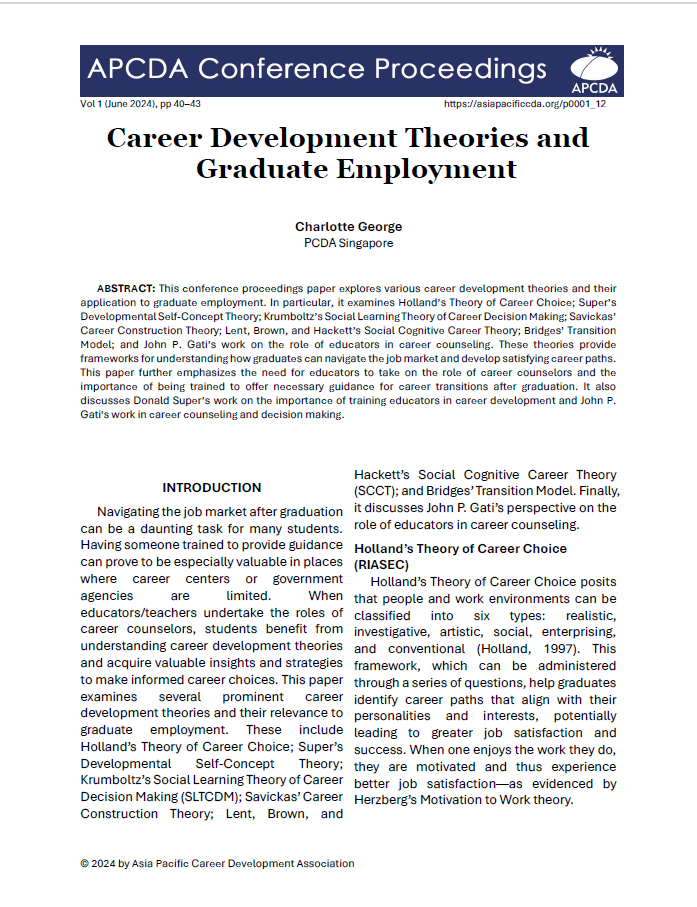
How Career Development Theories Help Graduate Employment
Dive into the insightful article "Career Development Theories and Graduate Employment" by PCDA Singapore's President Charlotte George, where you'll discover how various career development theories can transform the way educators guide students through their career transitions. From Holland’s Theory of Career Choice to Savickas’ Career Construction Theory, this comprehensive exploration reveals the power of aligning personality with career paths, understanding lifelong career evolution, and leveraging social learning for informed career decisions. Whether you're an educator, student, or career counselor, this article offers valuable perspectives that can enhance your approach to career development and graduate employment.
You may read it here or visit https://asiapacificcda.org/wp-content/uploads/2024/06/apcda_cp0001_12.pdf. If you’re an educator, a career coach in an IHL, or involved in working with youths, we invite you to join PCDA.
View the full PDF flipbook below:
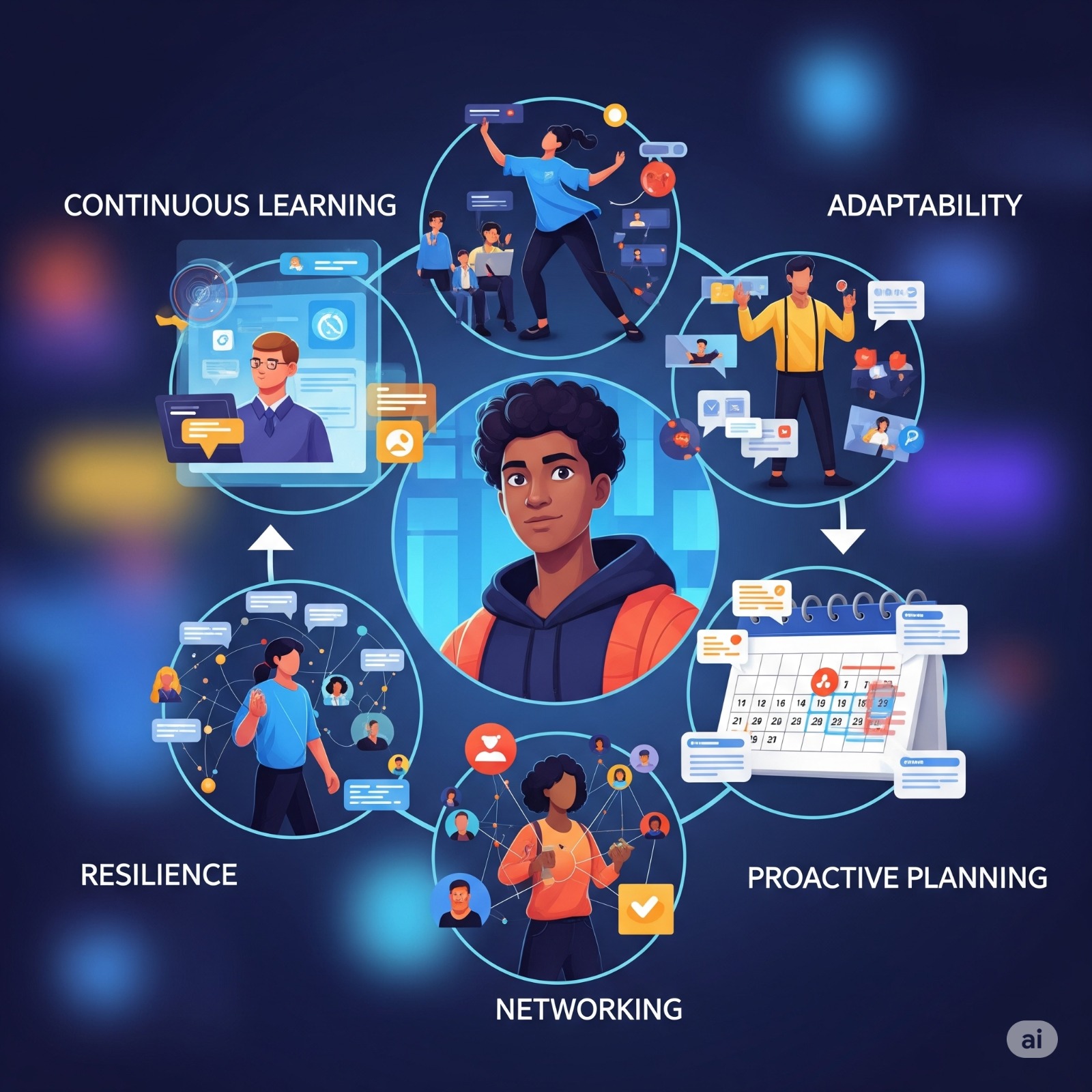
Your Career in a BANI World: 5 Essential Strategies
The professional world is now a BANI environment – Brittle, Anxious, Non-linear, Incomprehensible. This means systems can unexpectedly shatter, uncertainty fuels anxiety, cause and effect are unpredictable, and information overload makes sense-making difficult. Traditional career planning simply won't cut it.
Here are five practical strategies to thrive in this new landscape:
- Embrace Continuous Learning & Reskilling: Dedicate regular time (e.g., an hour weekly) to learning. This could involve online courses, industry webinars, or experimenting with new tools. Focus on both hard skills (e.g., data analysis) and future-proof soft skills (e.g., critical thinking, creativity).
- Cultivate Radical Adaptability: Regularly assess your interests and transferable skills. Be willing to take on projects outside your comfort zone. Consider opportunities that might seem lateral if they offer valuable new experiences or exposure for long-term growth.
- Build a Resilient Mindset & Prioritize Well-being: Implement daily self-care rituals like mindfulness or exercise. Practice reframing challenges as learning opportunities. Understand your stress triggers and develop healthy coping mechanisms. Don't hesitate to seek professional support if needed.
- Strengthen Your Network Actively: Don't wait until you need a job to network. Schedule regular, informal check-ins with former colleagues, mentors, and peers. Offer help as much as you seek it. Engage genuinely on professional platforms and at industry events.
- Adopt a Proactive, Agile Approach to Career Planning: Define broad career directions instead of fixed roles. Set quarterly or semi-annual mini-goals for skill development or project experiences. Regularly review and adjust these goals based on market changes and personal growth. Your career is a living document, not a static blueprint.
By adopting these strategies, you can not only survive but truly thrive and find purpose in the evolving BANI world. To find out more from like-minded career development individuals, join PCDA.
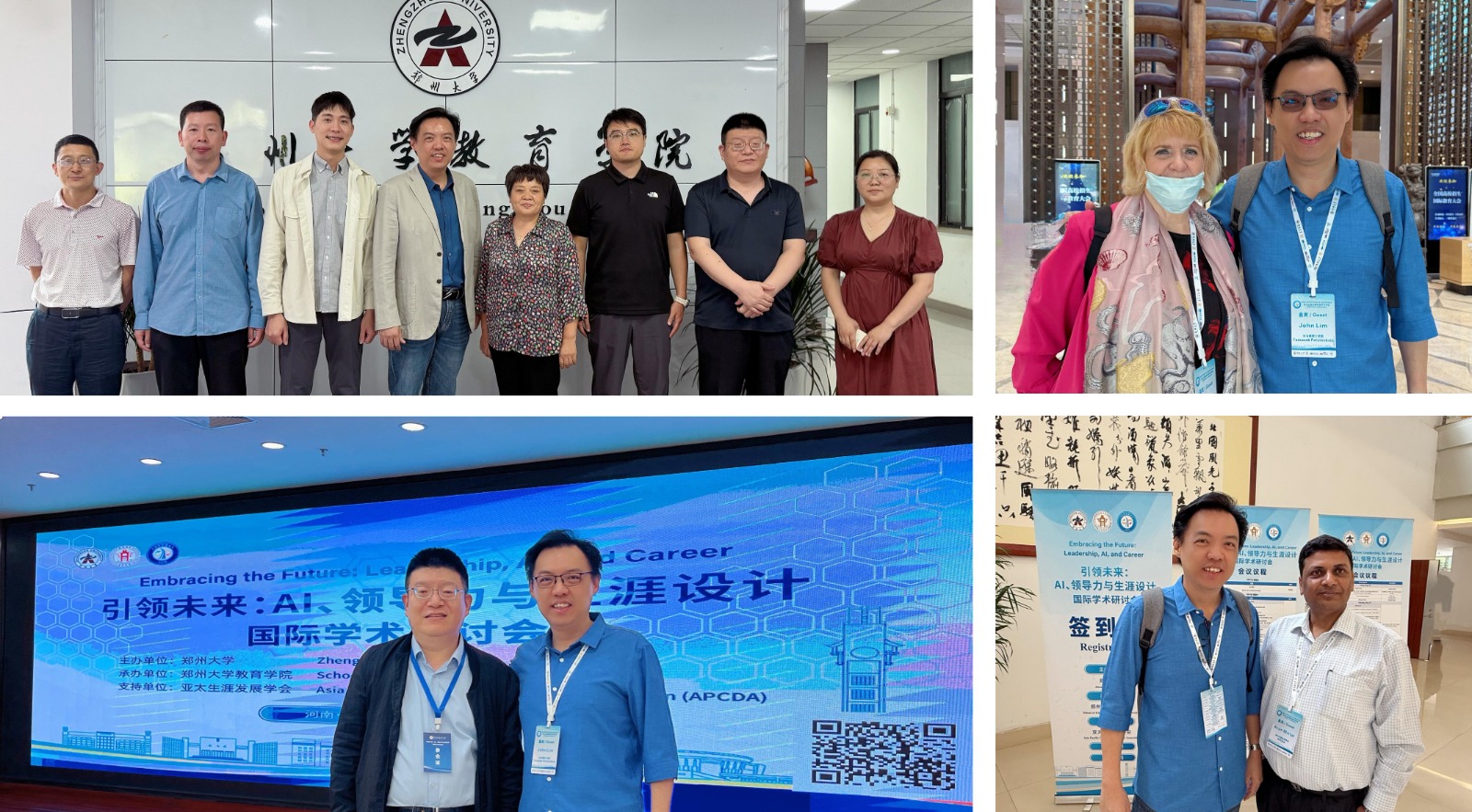
Embracing the Future at APCDA Conference 2025
By John Lim, PCDA EXCO member
I had the privilege of attending the Asia Pacific Career Development Association (APCDA) Conference 2025, held from May 12 to 26 at Zhengzhou University, Zhengzhou, Henan, China. With the theme “Embracing the Future Through Leadership, AI, and Career Design,” this hybrid conference brought together career development professionals, researchers, and educators from many Asian countries and regions as well as other parts of the world to explore emerging challenges and co-create future-ready solutions.
A keynote highlight was Dr. Kevin Glavin’s presentation, “AI-Driven Career Design for a Brighter Future.” He addressed the rising disconnection many young people feel toward traditional career paths – seen globally in trends like Tang Ping and the Sampo Generation. Rather than apathy, this reflects a response to inequality, job insecurity, and rapid technological change. Dr. Glavin introduced how Career Construction Theory (CCT), when paired with AI tools like the Career Construction Interview (CCI), can help individuals reframe their career stories and build meaningful, adaptable paths forward. As a participant, I was reminded of the power of connection in our profession.
APCDA offers a valuable platform to learn from diverse perspectives, build meaningful networks, and inspire change. I encourage fellow practitioners to stay curious, connect widely, and contribute actively to the evolving career development landscape.
I encourage you to join us as a member of PCDA Singapore and benefit from insightful lessons and great networking opportunities with like-minded individuals.

Navigating Tomorrow's Workforce
In Singapore's dynamic and ever-evolving economic landscape, career development has moved beyond a mere individual pursuit to become a critical pillar for national growth and resilience. As industries transform through technological advancements and global shifts, a proactive approach to managing and nurturing talent is paramount. Career development initiatives empower individuals to acquire future-ready skills, adapt to changing job demands, and make informed decisions about their professional trajectories. This not only benefits the individual in achieving career satisfaction and economic stability but also strengthens Singapore's workforce competitiveness on the global stage.
For businesses in Singapore, investing in career development programs yields significant returns. A well-developed workforce is more engaged, productive, and innovative. By providing opportunities for upskilling, reskilling, and internal mobility, organizations can retain top talent, reduce recruitment costs, and foster a culture of continuous learning. Furthermore, effective career development strategies contribute to building a resilient workforce capable of navigating economic uncertainties and embracing new opportunities. This proactive approach ensures that Singaporean businesses remain agile and competitive in the face of global challenges.
On a national level, a robust career development ecosystem is crucial for Singapore's continued success. By equipping its citizens with the necessary skills and adaptability, Singapore can effectively address future workforce needs and capitalize on emerging industries. Initiatives that promote lifelong learning, career guidance, and industry-relevant training contribute to a highly skilled and adaptable talent pool. This not only enhances individual employability but also strengthens Singapore's position as a knowledge-based economy and a hub for innovation.
The importance of career development is further amplified by the unique challenges and opportunities within the Singaporean context. A diverse workforce, the need for continuous upskilling in a rapidly changing technological environment, and the emphasis on a future-ready workforce all underscore the necessity for accessible and effective career development support. From early career guidance in educational institutions to ongoing professional development opportunities, a comprehensive approach is vital to ensure that individuals can thrive and contribute meaningfully to Singapore's progress.
Are you passionate about empowering individuals and shaping the future of work in Singapore? Join the People & Career Development Association of Singapore (PCDA) today! Become part of a vibrant community of professionals dedicated to advancing the field of career development. As a member, you'll gain access to valuable resources, networking opportunities, and the chance to contribute to the growth of talent in Singapore. Take the next step in your professional journey and help us build a stronger, more skilled workforce for tomorrow.